
 MCP server


High in the Sierra Nevada de Santa Marta, the mountain range that rises straight out of the Caribbean in northern Colombia, live the Kággaba, known to most of the world as the Kogi. They call the mountain the Heart of the World, and they have cared for it since long before Colombia existed.
The Kogi see themselves as the Elder Brothers: the people charged with keeping the world in balance, who watch with growing concern what the rest of us, the Younger Brothers, are doing to it. Their way of life is built around that duty. Rivers, peaks, seeds and animals each have a place and a purpose, and caring for them is not a hobby or a policy. It is the work.
Their spiritual leaders, the Mamos, begin their training as small children, in darkness, away from daylight, for many years. Their letter says the training traditionally lasts eighteen years. For the Kogi, that darkness is not emptiness. It is the state before dawn, the place of first thought, and there "a child is trained to listen before speaking and to think before acting." When the training ends, a Mamo takes up his duties as one of the keepers of their knowledge, alongside the Sakas, who are trained differently and are their equals.
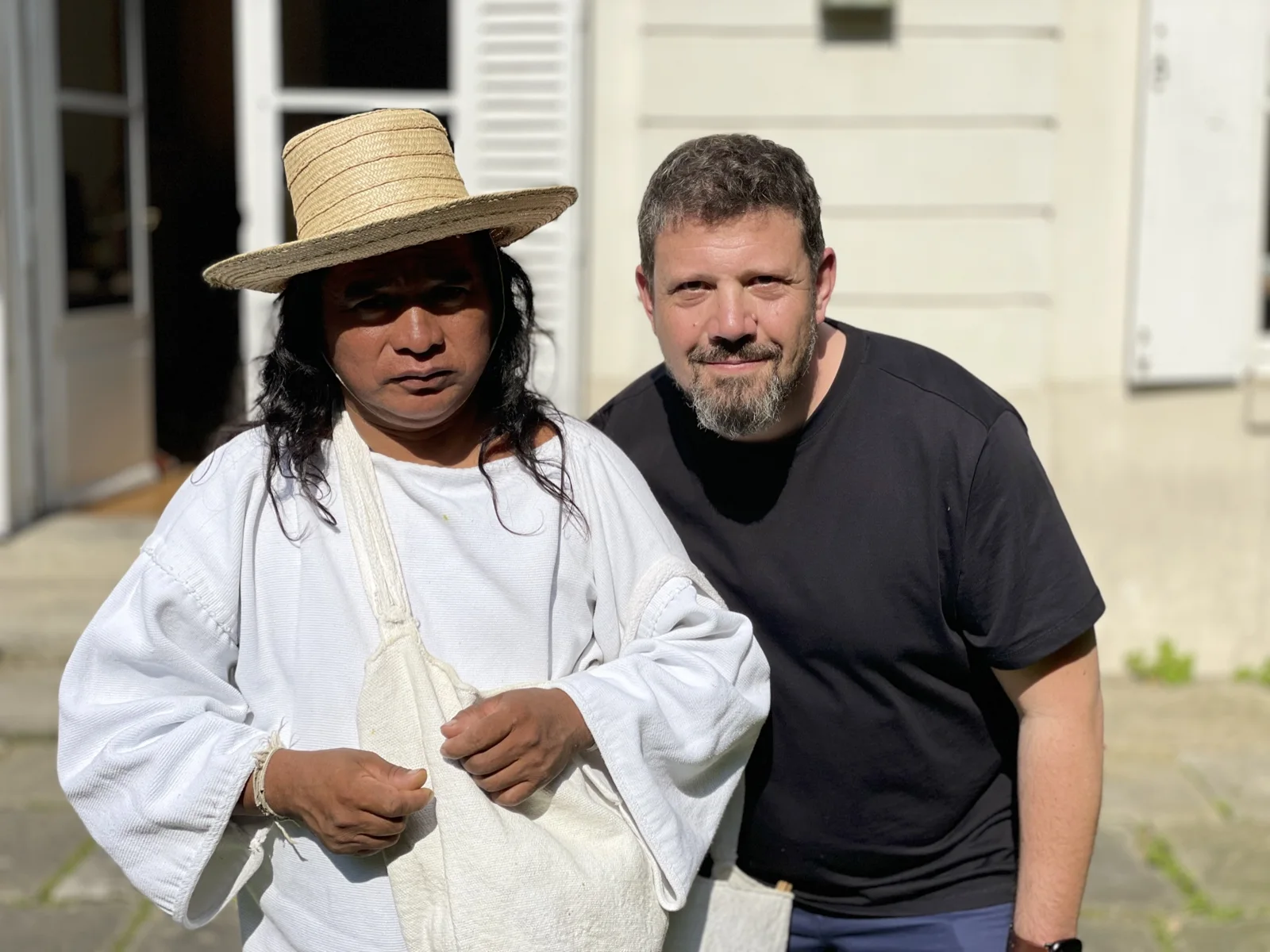
I have met the Kogi. So when their Mamos and Sakas wrote a letter to the people building artificial intelligence, I read it twice. You can read the whole of it, "Un mensaje del pueblo Kogui sobre la inteligencia artificial", in Spanish; the quotes below come from an English translation. They are clear about why they wrote: "We do not come in opposition. We come because we are concerned, and because we believe we have something to contribute."
I won't summarise their view of the world. It is theirs, it is far older than mine, and it deserves to be read in their own words. What surprised me was how much of what they ask of AI builders is what Respira was already built on. Respira is a tool that lets an AI work on live WordPress sites, and its whole design rests on a few beliefs about responsibility and limits. Reading the letter, I found those beliefs stated better than I ever had. In a few places it named things I did but had never written down. Those I added this week.
So this is not a story about a lesson learned. It is a map: where an old way of seeing and a young piece of software already agree, and what I wrote down because their words made it impossible not to.
Listen before you speak
There, a child is trained to listen before speaking and to think before acting, much like a seed held within the earth before emerging into the light.
Already in Respira. The first rule every connected agent reads, before any tool call, is "Read before you write." An agent starts by reading the site's context and its page builder, and finds the exact element before it changes anything. Every site also keeps its own memory, on the WordPress site itself: why a page is built the way it is, what the client never wants, what broke last time. Agents read it first. A protect rule in that memory blocks writes to the pages it names, through every agent, and that refusal is final.
The letter goes further: "there are things that can only be known by living them." It means something far deeper than websites, and I don't want to flatten it. But at the scale I work at, it holds. The person who has run a site for six years knows things no model can infer from its HTML. The letter also asks "Best practices according to whom?", which is why every design rule in Respira can be waived. The owner's direction outranks my idea of good taste.
Added this week. A value in SOUL.md, the file every agent reads first: the site's own knowledge outranks yours. And a new pledge in the manifesto: "I listen to the site before I change it."
A mirror that magnifies
Artificial intelligence is a mirror. But a mirror that merely reflects would be harmless; this mirror has the capacity to enormously magnify everything it reflects.
An AI agent working on a live site is exactly this mirror. It has no intentions of its own about your client's homepage. It amplifies whoever directs it, and it amplifies their mistakes as faithfully as their judgement. A vague request becomes forty confident edits. A rushed instruction reaches every page that uses a template.
Already in Respira. Nothing an agent does to a published page goes live on its own. The edit lands on a draft copy that a person approves, and every page and post write saves a snapshot first, so any change is one restore away. Writing to a block theme's templates is switched off by default, because one template change reaches every page that uses it.
Added this week. The reason, written into SOUL.md as a value: you amplify the person, so act on their intent. When an agent cannot tell what the owner wants, the smaller change or one short question is the right move, never the bigger guess.
Responsibility stays with a person
Artificial intelligence must not take the place of human conscience, nor should it be used to make decisions for which human beings are unwilling to be held accountable.
Already in Respira. This is the line Respira was built on: the AI does the work, a person owns the decision. Since version 9.1.26, an agent connected to a site cannot open the settings that govern it. It cannot approve its own drafts, change its own permissions, switch off the audit log or create a new key. When it tries, Respira refuses, records the attempt and tells the agent to ask the site owner. The letter puts it more simply than my release notes did: "A machine cannot relieve humanity of its responsibility."
Added this week. The line stated in public, as the first of five principles on the About page: a person decides. Every change that goes live has someone who said yes to it.
Knowing when not to
Wisdom is knowing limits. It is understanding consequences. And it is the ability to refrain from an action when it ought not to be taken. Not everything that can be created should be created.
Already in Respira. Respira refuses a lot. An agent cannot write SQL against your database or edit its tables directly. It cannot approve its own work. Skills are never put behind a paywall. Telemetry never carries your page content, prompts or tool results. And I do not promise dates that have not been decided.
Added this week. This is the one that stung, because those refusals were scattered across code, docs and habits, and I had never written them down in one place. Now they are a short list on the About page, "What Respira will not do." SOUL.md has a matching value: not doing is a valid answer. If a change cannot be made safely, or cannot be undone and the person has not asked for exactly that, the agent says so and stops. And the manifesto has a new pledge: "I know when not to build, because not everything that can ship should."
Proven by the outcome
The Kogi describe how they test what a Mamo perceives. It "is not accepted merely because he perceives it; it must be tested, considered, and confirmed through consultation and dialogue." They call that process Zhátukua. "Validity is proven by the outcome," they write, and "there must be consistency between a person's words and their conduct."
Already in Respira. A software version of this, at a much smaller scale. A second model checks every change Respira AER proposes before it is applied. A restore can be checked against its snapshot instead of trusted, and the docs show how. Agents are told to report a write as done only when the page reads back the way it should, never on the strength of a success message.
Added this week. Words and conduct, applied to the website itself. Every number on respira.press was compared with what the code does. Where they disagreed, the code won and the page changed. That is now a rule every change goes through: no claim ships ahead of the code.
The river questions
A Mamo does not look at a river and ask, first and foremost, how much water can be extracted from it. He asks where it originates, what purpose it was created for, which beings depend on it, and what happens if its path is interrupted.
Already in Respira. The instinct, if not the words. Changing a post type, a taxonomy or a field group saves the previous definition first, because other things depend on it. Template writes are off by default, because their reach is wide.
Added this week. The questions themselves, as a gate. Before Respira builds anything that writes to a site, four questions have to be answered. What does this touch, exactly? What depends on it? What happens if it is interrupted halfway? How does a person undo it, and has the undo been proven once? If any answer is "not sure", the feature is not ready.
Artificial intelligence has a body
It is often thought that artificial intelligence has no body. Yet those buildings, and the electronic systems they contain, constitute its body.
The letter is direct about what that body needs: minerals, water, energy, land and human labour, and about who tends to pay for it. It notes that Colombia has closed one and a half million hectares of the Sierra to new mining and hydrocarbon concessions, at the request of its four peoples, and asks whether that protection will be respected.
Already in Respira. Restraint where I can show it. Respira Exhale, the HTML to WordPress converter, turns a finished HTML page into a builder page with plain code and no AI model at all. Respira AER sends a model only the tools a task needs instead of hundreds. And I should be honest: Respira runs on models trained and served by companies whose appetite for exactly those resources the letter describes. I am not outside this, and I can't fix it from Brașov.
Added this week. The principle, on the About page: the model only where it matters, plain code everywhere else.
Listening to the edge
The letter asks the center to "listen to the periphery, so that the latter can contribute its own perspective and experience." Respira is built in Brașov, a long way from where most AI tools are made, for people who run small agencies and their clients' sites. Most of what it does came from someone at the edge asking for it: an agency owner whose trustees needed to review a staging site, a customer whose teammate kept seeing the wrong plan. Nothing to add here. I intend to keep building from there.
What I added this week
- Manifesto 1.1, with two new pledges: "I know when not to build, because not everything that can ship should" and "I listen to the site before I change it." The first five are unchanged, and the page says earlier signatures were given to version 1.0. Read or sign it.
- How Respira decides, on the About page: a person decides, the site knows best, knowing when not to, the model only where it matters, claims the code can back, and what Respira will not do. See it.
- Three values in SOUL.md, the file every agent reads first: act on the person's intent, the site's own knowledge outranks yours, and not doing is a valid answer. Read it.
- The four river questions, as a gate every change that writes to a site has to pass.
The offer at the end
The letter closes without anger. "The world is one family," they write. "We are ready to work with you to create a harmonious, peaceful future for all." It is an offer of help from people who have spent a very long time watching how life is sustained, made to an industry that has mostly not asked.
If you build anything with AI, read it in full. It takes twenty minutes. Then ask of the next thing you ship the questions a Mamo asks of a river.

Join the conversation
0 comments · Respira accountNo comments yet. Be the first to weigh in.